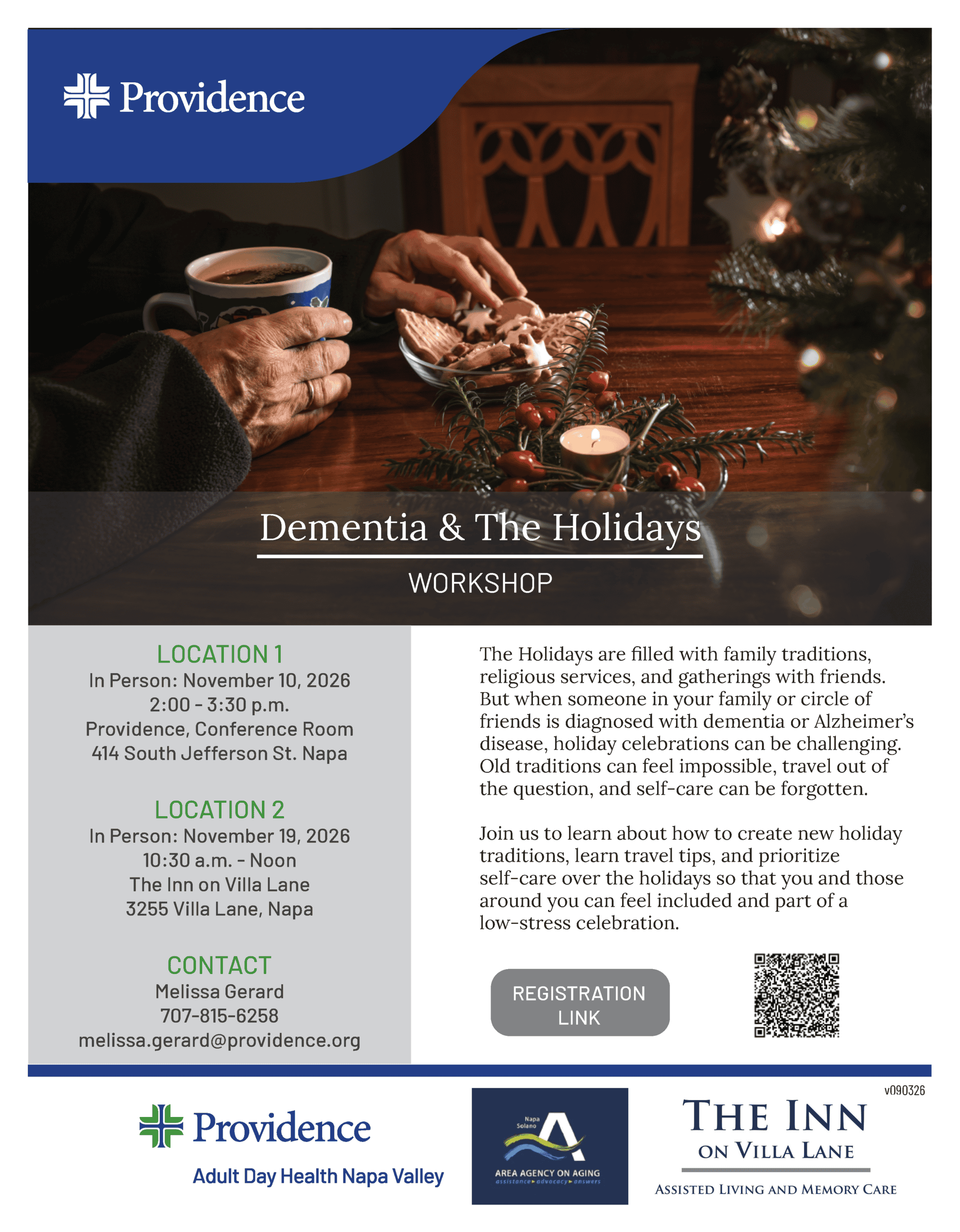
Tips for a More Peaceful Holiday
Scroll down for information on our upcoming Dementia & The Holidays workshops.
The holidays are often filled with treasured traditions, family recipes, and long-awaited reunions. But if someone you love is living with dementia, it may be necessary to adjust expectations and create new traditions that better support their comfort and well-being.
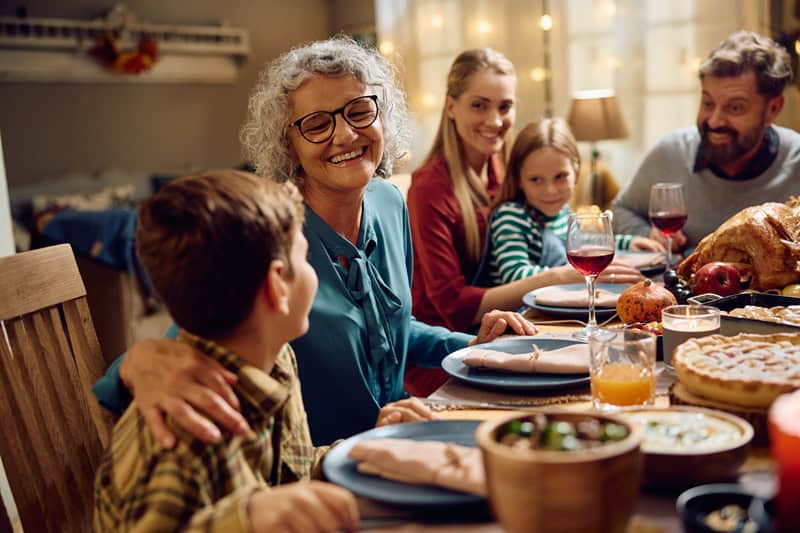
Here are some practical ways to help make Thanksgiving more enjoyable for everyone at the table.
- Keep the Day Simple
Large gatherings and packed schedules can be overwhelming for someone living with dementia. Consider simplifying your celebration by reducing the number of activities, limiting distractions, and structuring the day around familiar routines.
Try to maintain regular meal times, medication schedules, and rest periods whenever possible. Consistency helps reduce anxiety and confusion.
Remember: Thanksgiving doesn't have to be perfect. A calm, enjoyable day is more important than a flawless event.
- Prepare Guests Ahead of Time
If family members haven't seen your loved one in a while, let them know what to expect before they arrive.
Share helpful guidance such as:
- Speak slowly and clearly.
- Introduce themselves when approaching.
- Avoid correcting memory mistakes.
- Focus on meaningful conversation rather than testing memory.
A little preparation can help everyone feel more comfortable and prevent awkward or frustrating interactions.
- Create a Quiet Retreat Space
Holiday celebrations are often filled with noise, laughter, music, and multiple conversations happening at once. While this can be enjoyable for many people, it may become overstimulating for someone with dementia.
Set aside a quiet room where your loved one can rest if they become tired or overwhelmed. Include comfortable seating, familiar items, soft lighting, and minimal noise.
Having a peaceful place to retreat can help prevent agitation and make it easier for them to rejoin the gathering later if they choose.
- Encourage Participation
People living with dementia often benefit from feeling included and purposeful.
Look for simple ways they can participate in holiday preparations, such as:
- Folding napkins
- Setting the table
- Stirring ingredients
- Arranging flowers
- Sharing family photos
Focus on the experience rather than the outcome. Participation can foster a sense of belonging and dignity, regardless of the task completed.
- Embrace Familiar Traditions
Many individuals with dementia find comfort in familiar routines and memories.
Play favorite songs, prepare traditional family recipes, look through photo albums, or share stories from past holidays. These activities can spark positive memories and create meaningful moments of connection across generations.
- Be Flexible About Mealtime
A large Thanksgiving meal can sometimes be challenging for a person living with dementia.
To make dining easier:
- Serve smaller portions.
- Minimize clutter on the table.
- Offer familiar foods.
- Reduce distractions such as loud television or music.
- Allow extra time to eat.
If your loved one becomes tired or hungry earlier than planned, consider adjusting meal times to meet their needs.
- Focus on Connection, Not Correction
Your loved one may forget names, repeat stories, or become confused about people or events. While it can be tempting to correct inaccuracies, doing so may increase frustration or embarrassment.
Instead, respond with patience and kindness. Meet them where they are, redirect gently when needed, and focus on enjoying the moment together.
The goal of the holiday is not perfect memory. It's meaningful connection.
- Watch for Signs of Fatigue
Thanksgiving activities can be exhausting. Pay attention to signs that your loved one may be becoming overwhelmed, such as:
- Increased confusion
- Restlessness
- Irritability
- Withdrawal from conversation
- Difficulty concentrating
If these signs appear, offer an opportunity to rest, take a short walk, or spend time in a quieter setting.
- Take Care of Yourself, Too
Caregivers often feel pressure to create a perfect holiday while managing the daily realities of dementia care.
Give yourself permission to simplify traditions, accept help, and set realistic expectations. Your well-being matters, too.
Whether the turkey is perfectly cooked or the gathering looks exactly like years past is far less important than creating a sense of warmth, comfort, and togetherness.
A Season for Grace
Dementia may change the way Thanksgiving looks, but it doesn't take away the opportunity to share love, gratitude, and meaningful time together. By planning ahead, staying flexible, and focusing on connection rather than perfection, caregivers can create holiday memories that honor both the season and the people they cherish.
This Thanksgiving, offer yourself and your loved one the gift of grace. The most meaningful moments are often the simplest: a shared smile, a favorite song, a familiar story, or holding hands around the table with those who matter most.
#DementiaCare #AlzheimersAwareness #CaregiverEducation #SeniorHealth #AgingWell #CaregiverResources #MemoryCare #CommunityHealth #BrainHealth #FamilyCaregivers #SeniorSupport #DementiaAwareness

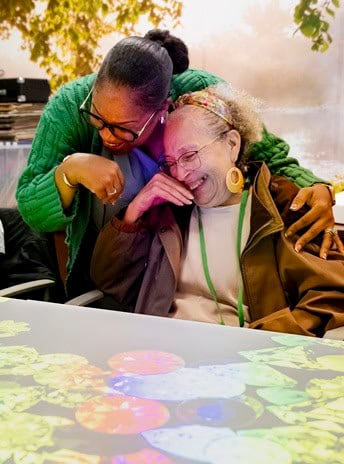

Providence Adult Day Health Napa Valley provides care, therapies, social services, and engaging activities for older adults living with chronic health conditions or memory loss.
Through personalized care plans, caregiver support, transportation, and wellness-focused programming, the program helps participants maintain independence, enhance quality of life, and remain safely connected to their community.
The program is also home to the Alzheimer’s & Dementia Resource Center, which offers support, resources, and guidance for individuals and families affected by memory loss, as well as community education programs that promote brain health, caregiving skills, and dementia awareness.